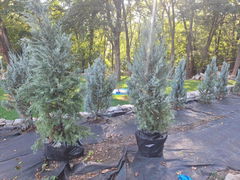
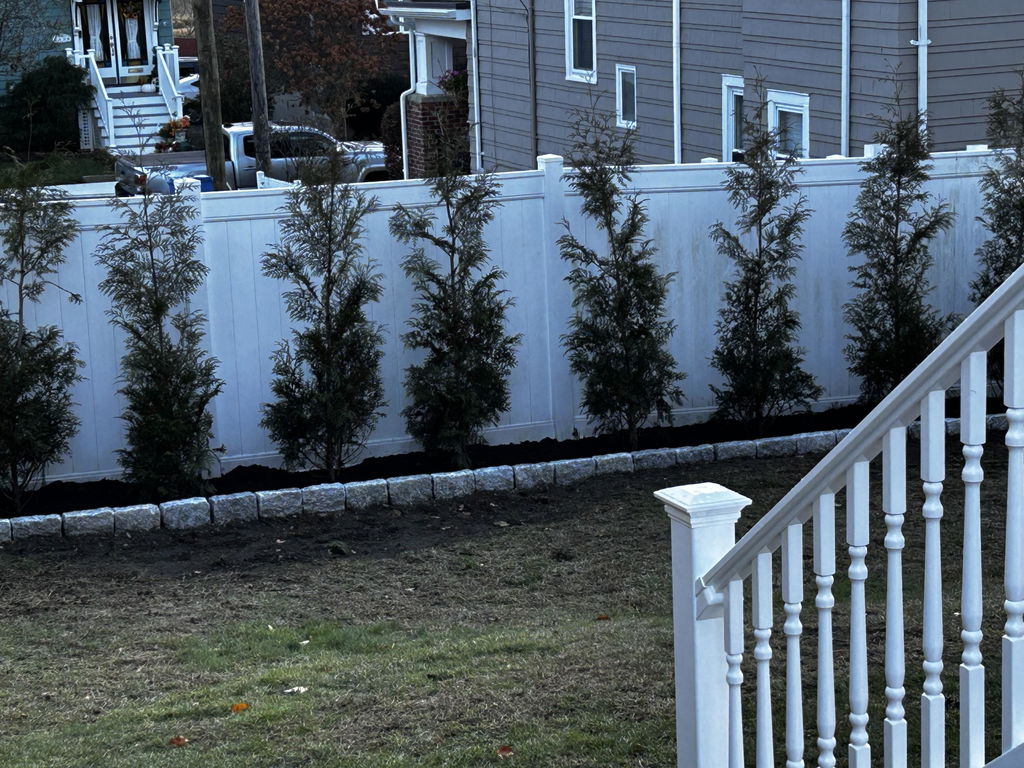
Choose Colorado Blue Spruce if you want the classic blue evergreen — the straight species, seed-grown, not a named cultivar. The tradeoff is variability: seedlings range from steel blue to green-blue, and no two are identical. If you need a matched row of uniform color, buy a grafted cultivar instead.
Buy This If
You have real room — this gets big.
You want blue color without paying cultivar prices.
Some variation between trees is fine with you.
Skip This If
You need guaranteed uniform blue.
Your site stays wet.
You are planting close to the house.
PGNE Report Card
Category
Grade
Why
Landscape Impact
A-
Strong pyramidal form and blue color read from a distance, though seedling variation means some trees are bluer than others.
Growth Rate
B
Steady rather than fast. Plan it as a long-term planting.
Maintenance
B+
Little pruning needed if you site it with enough room. Keep lower branches.
Deer Resistance
A-
Deer rarely browse spruce, though young trunks can still get rubbed.
Small Space Fit
D
Mature spread is 15-20 ft. It does not belong near walks or windows.
Screening Value
B+
Excellent windbreak and view block once established, but it needs generous spacing to do it.
Color Consistency
C+
Seed-grown, so blue intensity varies tree to tree. This is the main difference from a grafted cultivar.
Our Experience
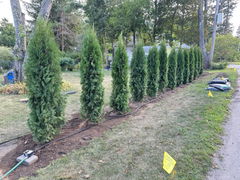
At PGNE, we'd typically recommend the straight species for windbreak rows and large lawns where you want blue color across a lot of linear feet without cultivar pricing. If color has to match tree to tree, spend up for Baby Blue or another named selection. Give it 15-20 ft of spacing and leave the lower branches alone — limbing up a spruce rarely looks right afterward.
Plant Facts
Botanical Name
Picea pungens var. glauca
Common Name
Colorado Blue Spruce
Mature Height
30-60 ft
Mature Width
15-20 ft
Spacing
15-20 ft
Hardiness Zones
2a-7b
Sun
Full sun
Moisture
Dry to average, well drained
Growth Habit
Upright, broadly pyramidal
Evergreen
Yes
Native
No (native to the Rocky Mountain west)
Customers Usually Ask
How blue will it be?
It varies. These are seed-grown, so expect a range from steel blue to blue-green. Grafted cultivars like Baby Blue are the choice when you need consistent color.
How far apart should I plant them?
15-20 ft for a windbreak row. Crowding blue spruce leads to dead lower branches on the shaded sides.
Will deer eat it?
Spruce is a good bet where deer browse, though hungry deer can sample almost anything and bucks will rub young trunks.
Why Choose Specimen Conifers?
Collector-grade varieties not found at big box stores
Delivered 4–7 ft mature and ready to plant
Regionally hardy — grown for New England conditions
We grow and deliver direct — no middleman, no shipping damage
We use your zone to show which plants are hardy where you live.
Choosing a selection results in a full page refresh.
Opens in a new window.
Jonathan Berenson
Showed up on time and planted it perfectly. I indicated a light we had to illuminate it and they placed it for optimal lighting. Worked fast and left a clean worksite. First rate!
Installation Service
Anonymous
They delivered three trees: a big linden, a big poplar and a little spice bush with install on the big trees. The install guys were great and professional and fast. All the trees looked good with minimal damage.
Northern Spicebush
Joseph Sico
I went up there today from Quincy MA to pick up two Blue Wichita Junipers and they were absolutely beautiful. Thank you, Chris and everybody from Pro Growers of New England!
Wichita Blue Juniper
Aileen Maconi
The plants are beautiful and all 13 were consistent in height and width. And at a fraction of the cost of other garden centers. Having the team that delivered them do the planting was one of the best values I can think of. They did a great job from start to finish and even helped me with my watering system which they didn’t have to do!
I couldn’t be present when the tree was planted. I was very happy with the tree. It was planted correctly and at the proper height. As an arborist I see trees improperly planted frequently. Thank you!
They're very "leggy" right now but that's not unexpected in the fall. Otherwise, they look healthy, and we're looking forward to seeing them next year.