Amazing! I mistakenly did a duplicate order, they credited me right away! Exceptional communication. The installation crew was great. Installed with care and did a perfect job. Very happy with all aspects of my order.
1
/
of
2
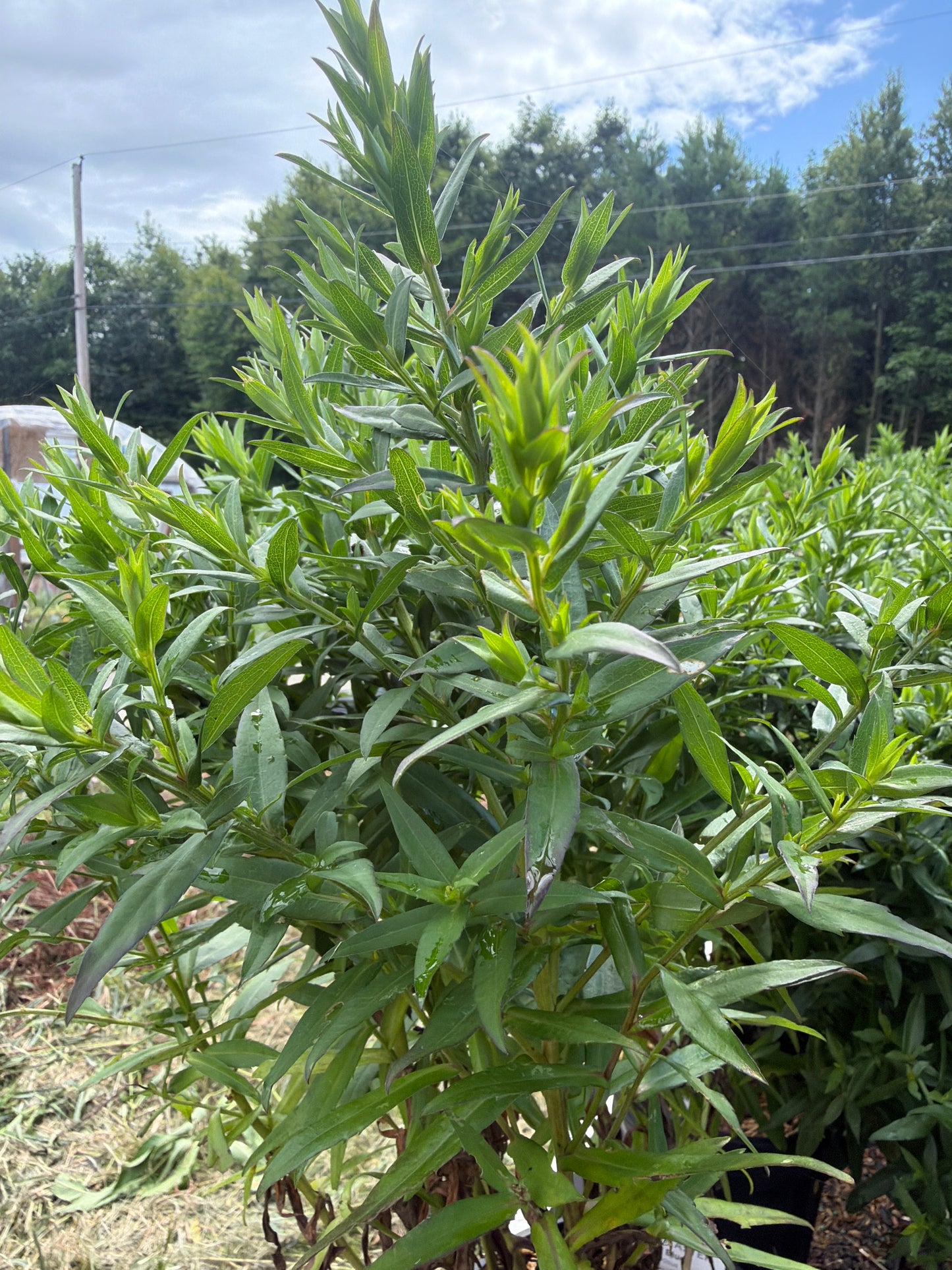
Wood's Blue Aster
Wood's Blue Aster
$11.25
Shipping calculated at checkout.
Quantity
Buy more, save more
Discount applied automatically at checkout
| 1–5 | — | $11.25 ea |
|---|---|---|
| 6-11 | 10% off | $10.12 ea |
| 12-23 | 20% off | $9.00 ea |
| 24+ | 25% off | $8.44 ea |
11 in stock
Symphyotrichum dumosum 'Wood's Blue'
Choose Wood's Blue Aster for compact, mildew-resistant blue late-season color in a sunny border. The tradeoff: it blooms in late summer and fall, so pair it with earlier perennials for summer interest.
Buy This If
- You want blue late-season bloom.
- You plant in full sun.
- You need compact, tidy border color.
Skip This If
- You need summer-long flowers.
- Your soil stays wet.
- You need height or screening.
PGNE Report Card
| Category | Grade | Why |
|---|---|---|
| Landscape Impact | A- | It delivers strong blue color late in the season when many perennial beds are winding down. |
| Growth Rate | B+ | It fills a small planting relatively quickly while holding a compact habit. |
| Maintenance | B | It is easy in full sun with dry-to-average soil, and the Wood's series resists powdery mildew better than older asters. |
| Deer Resistance | B+ | Deer tend to leave asters alone, though hungry deer may sample it where pressure is heavy. |
| Small Space Fit | A | Its low, mounding, clumping habit suits borders, edging, and smaller landscapes. |
| Screening Value | D | This is a color perennial, not a privacy or structure plant. |
Our Experience
At PGNE, we'd use Wood's Blue in the front or middle of sunny beds alongside earlier bloomers, so the planting carries color before the late-season aster show. Keep the soil lean and sunny for the best, most upright habit.
Plant Facts
| Mature Height | 1.5 ft |
|---|---|
| Mature Width | 1.5 ft |
| Hardiness Zones | 3a-8a |
| Spacing | 1.5 ft |
| Sun | Full Sun |
| Moisture | Dry to average |
| Growth Habit | Upright, bushy, clumping |
Customers Usually Ask
When does it bloom?
Late summer into fall; it is grown for late-season color, not summer-long flowers.
Is it good for pollinators?
Yes; native asters are a key late-season nectar source for bees and butterflies.
Does it get powdery mildew?
Much less than old-fashioned asters; the Wood's series was selected for improved mildew resistance.
Why buy for fall color
- See the actual color before you buy it
- Foliage, berries and late bloom — all three seasons of interest
- Fall planting means roots established before winter
Locally grown for New England conditions
Every plant in our Fall Sale is grown or hardened off right here in New Hampshire, so it's already acclimated to New England winters before it ever leaves our nursery.
Pro Growers of New England, Inc
SKU:PGNE-41120
Share