Buy more, save moreDiscount applied automatically at checkout
1–5
—
$15.00 ea
6-11
10% off
$13.50 ea
12-23
20% off
$12.00 ea
24+
25% off
$11.25 ea
Low stock: 5 left
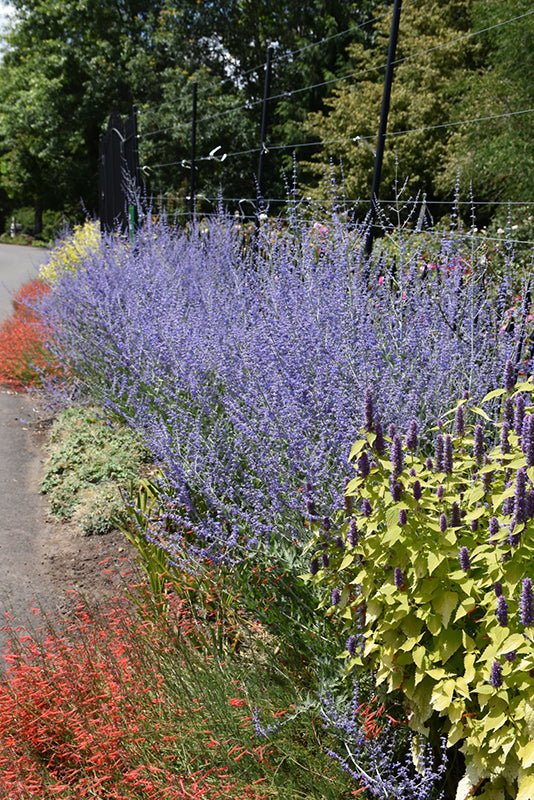
Salvia yangii (formerly Perovskia atriplicifolia)
Choose Russian Sage for a hot, dry, sunny bed where you want soft blue-purple color without much watering; the tradeoff is its loose, airy habit, so it is not the plant for a crisp, formal edge.
Buy This If
You want summer-to-fall color.
The bed runs dry between rains.
Deer browse many perennials nearby.
Skip This If
The site stays wet after rain.
You need a clipped, formal look.
The spot gets too little direct sun.
PGNE Report Card
Category
Grade
Why
Landscape Impact
A-
Its silvery foliage and blue-purple bloom read well from a distance, though the look is soft rather than structured.
Growth Rate
A
It fills in quickly once settled, which helps new plantings look established sooner.
Maintenance
B+
It asks for good drainage and a spring cutback, but not much watering once rooted.
Deer Resistance
A-
Deer usually pass this by, since the foliage deters browsing, though no plant is completely immune where pressure is severe.
Small Space Fit
C+
The airy habit can spread visually, so it needs room and may crowd narrow walkway beds.
Our Experience
At PGNE, we'd typically place Russian Sage in the hottest, driest perennial bed, not in rich, damp soil. Give it neighbors with enough weight to balance its airy habit early in the season.
Plant Facts
Mature Height
4 ft
Mature Width
3 ft
Hardiness Zones
4a-9a
Spacing
2.5 ft
Sun
Full Sun
Moisture
Dry to average
Growth Habit
Upright, airy, bushy
Customers Usually Ask
Does Russian Sage attract pollinators?
Yes, bees and other pollinators use the flowers heavily during bloom.
Will deer eat it?
It is a strong deer-resistant choice because of its aromatic foliage, but no plant is guaranteed untouched.
Does it flop?
It can lean in rich soil or too much shade; leaner soil and open exposure keep it sturdier.
Why buy for fall color
See the actual color before you buy it
Foliage, berries and late bloom — all three seasons of interest
Fall planting means roots established before winter
The Pro Growers of New England Advantage — Perennials
Perennials bring dependable color, texture, and seasonal interest to your landscape year after year. At Pro Growers of New England, our perennials are grown locally and selected for reliable performance in New England’s soil, temperature swings, and growing conditions.
We welcome customers to visit the nursery, explore our selection in person, and choose healthy, well-developed plants with confidence. When you purchase perennials from PGNE, you’re investing in locally grown varieties chosen for longevity, repeat bloom performance, and long-term garden success.
We use your zone to show which plants are hardy where you live.
Choosing a selection results in a full page refresh.
Opens in a new window.
Jonathan Berenson
Showed up on time and planted it perfectly. I indicated a light we had to illuminate it and they placed it for optimal lighting. Worked fast and left a clean worksite. First rate!
Installation Service
Jon Kenyon
Really great website, communication and installation. Very happy customer and would recommend them.
Fairview Juniper
Anonymous
They delivered three trees: a big linden, a big poplar and a little spice bush with install on the big trees. The install guys were great and professional and fast. All the trees looked good with minimal damage.
Northern Spicebush
Joseph Sico
I went up there today from Quincy MA to pick up two Blue Wichita Junipers and they were absolutely beautiful. Thank you, Chris and everybody from Pro Growers of New England!
Wichita Blue Juniper
Aileen Maconi
The plants are beautiful and all 13 were consistent in height and width. And at a fraction of the cost of other garden centers. Having the team that delivered them do the planting was one of the best values I can think of. They did a great job from start to finish and even helped me with my watering system which they didn’t have to do!
They're very "leggy" right now but that's not unexpected in the fall. Otherwise, they look healthy, and we're looking forward to seeing them next year.